UPDATED 2026 · ALL FLORIDA REGIONS

Florida
Roofing Guide

Everything You Need Before Replacing Your Roof

Real costs, material comparisons, wind zone rules, contractor advice, and a free satellite calculator — all in one place. Whether you’re pricing a shingle replacement, weighing metal vs tile, or just trying to figure out where to start, read these guides before you call a single contractor.

📚
What This Guide Covers
Costs · Materials · Contractors · Free Tools
Tampa Bay · Orlando · Delray Beach · The Villages · Ruskin · All of Florida
✦ 2026 Pricing Data ✦ All Major Materials ✦ Wind Zone Guides ✦ Free Calculator Included
Florida Homeowner Questions

Florida Roofing FAQ

Every common question Florida homeowners ask before a roof replacement — answered honestly, with no sales pitch.

💰

How much does a roof replacement cost in Florida in 2026?

Florida roof replacement costs in 2026 range from around $8,500 for a basic architectural shingle roof on a 2,000 sq ft home up to $50,000 for a premium standing seam metal roof. To break it down by material: architectural shingles run $8,500–$15,300, designer shingles $13,600–$28,900, metal roofing $10,000–$50,000 depending on type, clay tile $15,000–$40,000+, and flat roofing $8,000–$25,000. City also matters — South Florida’s HVHZ requirements push prices higher than inland markets. Use the free satellite calculator for a ballpark based on your specific home.
🛡️

Can a new roof lower my Florida homeowners insurance premium?

Yes — often significantly. Florida insurers offer premium discounts for roofs that meet wind mitigation standards. Metal and tile roofs rated for 140+ mph can generate reductions of 10–30% on your annual premium. After your new roof is installed, schedule a wind mitigation inspection for $75–$150. The certified report documents your roof’s hurricane-resistant features and goes straight to your insurer — most homeowners recover the cost of the inspection within the first month of savings.
🔄

Should I repair my roof or fully replace it?

The general rule: if your roof is under 10 years old and the damage is isolated, a repair makes sense. If it’s over 15 years old, has widespread wear, or has experienced significant storm damage, a full replacement is almost always the better financial decision. Repairs on an aging Florida roof are typically short-lived — the surrounding material keeps deteriorating and you often end up paying multiple repair bills before an inevitable replacement. Many Florida insurance carriers also stop covering roofs past a certain age, making replacement necessary to maintain coverage.
📅

When is the best time of year to replace a roof in Florida?

The best window is October through April — after hurricane season ends and before the next one begins. Florida’s dry season brings lower humidity, cooler temperatures, and fewer afternoon thunderstorms, all of which improve installation quality and curing times. Contractor demand is lower in winter too, which typically means shorter scheduling waits and slightly more competitive pricing. That said, if your roof is actively leaking or storm-damaged, do not wait for the ideal season — address it immediately to prevent interior damage from compounding.
🏗️

What is the best roofing material for Florida homes?

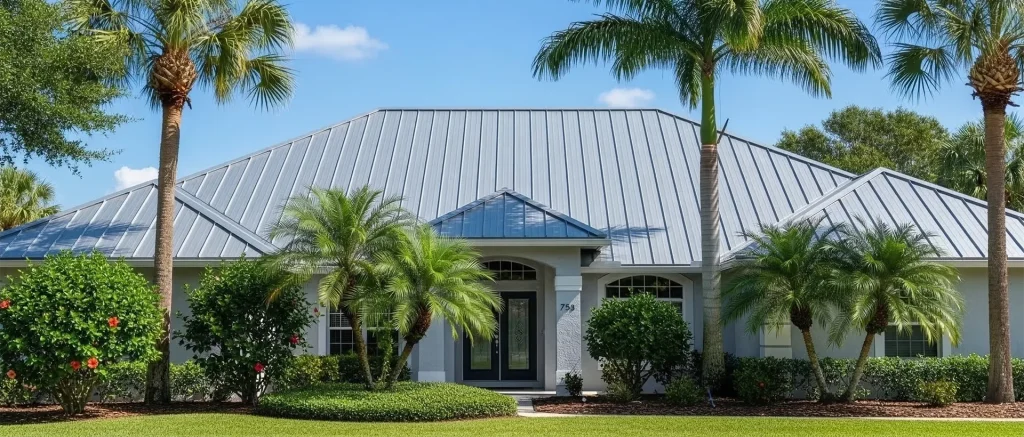
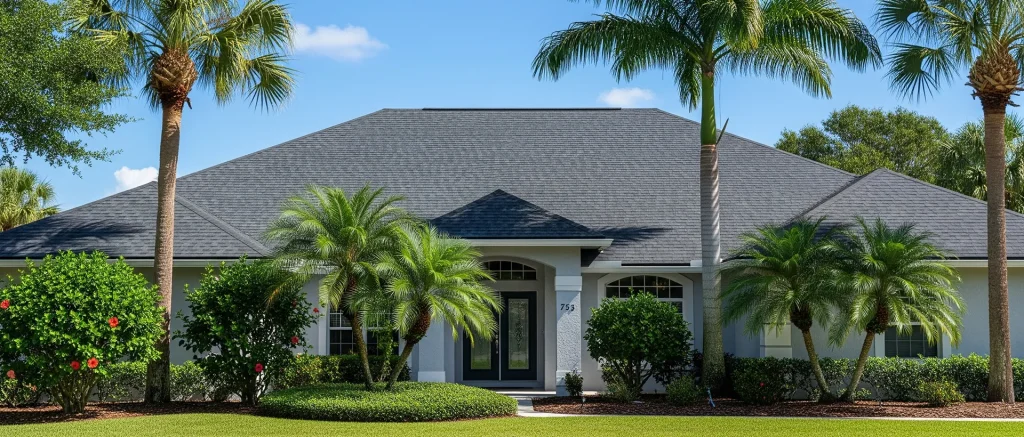
There is no single best material — it depends on your budget, wind zone, and goals. Standing seam metal leads on hurricane resistance and longevity (50–70 years) and delivers the best long-term ROI when you factor in insurance savings and near-zero maintenance. Architectural shingles are the most practical choice for budget-conscious homeowners. Clay tile dominates in South Florida for its aesthetics and 50+ year lifespan. All material choices must account for your county’s wind zone requirements and any HOA restrictions. The metal roofing guide and shingle guide break down every option with current pricing.

How long does a roof last in Florida?

Lifespan varies significantly by material — and Florida’s heat, UV intensity, and hurricane exposure shorten every lifespan compared to national averages. Here’s what to expect realistically: architectural shingles 20–25 years, designer shingles 25–35 years, galvanized or galvalume metal 30–50 years, standing seam metal 50–70 years, clay or concrete tile 40–50+ years, flat roofing (TPO/modified bitumen) 15–25 years. If a manufacturer quotes you a 30-year shingle warranty, assume 20–22 years of real-world Florida performance and plan accordingly.

How does Florida’s heat and UV affect roofing material choices?

Florida’s UV radiation and heat accelerate material degradation more than almost anywhere else in the country. Asphalt shingles lose granules and become brittle faster, dark roofs absorb heat and raise cooling costs, and lower-grade underlayments can fail under sustained thermal expansion. Metal and tile roofs hold up significantly better — metal roofs with reflective coatings can reduce attic temperatures by 25–40°F, directly lowering your year-round air conditioning bill. When comparing material costs, always factor in the energy savings difference, not just the replacement price.
🔄

Can I put a metal roof over existing shingles in Florida?

In some cases yes — Florida building code allows metal to be installed over an existing shingle layer if the deck is in sound condition and the total roof assembly meets wind requirements. However, most quality contractors recommend a full tear-off so the deck can be inspected and any rot or damage repaired before the new roof goes on. Skipping the tear-off to save $1,000–$2,000 can conceal problems that become $10,000+ issues later. The deck inspection alone is worth the cost of full removal.
🌀

What wind zone is my Florida home in — and why does it matter?

Florida has three wind zones plus the High Velocity Hurricane Zone (HVHZ). Wind Zone III covers Tampa Bay, Southwest Florida, and most coastal areas — materials must be rated for 140+ mph. Wind Zone II covers Orlando and Central Florida. Wind Zone I covers the northern inland Panhandle. The HVHZ covers Miami-Dade and Broward counties — the strictest roofing standard in the country, requiring Miami-Dade Notice of Acceptance (NOA) approval on every product used. Your zone determines which materials are legally permitted, what wind ratings they must achieve, and what your insurance carrier will or won’t cover.
📋

Does every Florida roof replacement require a permit?

Yes — every full roof replacement in Florida legally requires a building permit with no exceptions. Your contractor pulls it, but it must be tied to your property and visible in your county’s building department records. An unpermitted roof voids most manufacturer warranties, complicates or blocks home sales, and can invalidate an insurance claim after a storm. County inspectors can also order the roof torn off and redone at your expense, even years later. Permit fees ($300–$800 depending on county) should be included in every legitimate contractor quote — if they suggest skipping it, walk away immediately.
🏠

What is a wind mitigation inspection and do I need one after my new roof?

A wind mitigation inspection is a certified assessment of your roof’s hurricane-resistant features — deck attachment method, roof shape, secondary water barrier, and whether the covering meets current wind standards. The resulting report is submitted to your insurer and can reduce your annual premium by $500–$2,000+ depending on your roof’s rating. Inspections cost $75–$150 and are valid for five years. Every Florida homeowner who installs a new qualifying roof should schedule one immediately after the final inspection — the savings almost always far outweigh the cost.
🔍

How do I find a trustworthy licensed roofer in Florida?

Start by verifying their Florida state roofing license (CCC or CBC class) at myfloridalicense.com — it takes 30 seconds and confirms the license is active, the correct class, and free of disciplinary actions. Then confirm they carry both liability insurance and workers’ compensation. Check reviews on Google and the BBB, get at least two written on-site estimates, and never pay more than 10–15% upfront. Our Florida Roofer Directory lists only contractors who have passed every one of these checks — verified and updated regularly.
⚠️

What are the biggest red flags when hiring a Florida roofer?

The most common warning signs: door-to-door solicitation after a storm (out-of-state storm chasers who disappear when warranty issues arise), demanding 50%+ upfront before work begins, suggesting you skip the permit to save money, a quote dramatically lower than every other estimate, and same-day signature pressure. Florida also has strict laws around Assignment of Benefits (AOB) documents — it is illegal for a contractor to offer anything of value in exchange for signing an AOB. If anyone mentions AOB or rushes you to sign in the days after a storm, speak with a public adjuster before proceeding.
📝

How many quotes should I get — and how do I compare them properly?

Get at least three on-site written estimates, and do not just compare the bottom-line price. Look at: the exact product specified by brand, product line, and wind rating; whether tear-off and disposal is included; how surprise deck damage discovered during tear-off will be handled and priced; the warranty offered on both materials and workmanship separately; and whether the permit fee is included or billed separately. The cheapest quote is frequently the most expensive outcome once you account for inferior products, cut corners, or hidden charges added mid-project.
🤖

Is there an AI tool that can help me find the right Florida roofer?

Yes. FloridaRooferGuide.com is a free AI-powered tool that helps you think through material choices, cost expectations, and wind zone requirements for your specific home — before you speak with a single contractor. It answers questions in real time, helps you compare options, and can match you with a vetted local roofer when you’re ready. No forms, no callbacks, no obligation.

Ready to take the next step? Browse our vetted contractor directory or run a free satellite estimate for your home.

Find a Florida Roofer → Free Calculator →
🏠 Your Next Step

Ready to Find
Your Roofer?

Browse Florida’s top-rated licensed contractors by region, run a free satellite estimate in 60 seconds, or let our AI guide help you compare materials and find the right fit for your budget and wind zone.

or use AI to compare options and find your match
🤖 Find My Roofer with AI  →

Free to use · No sign-up required · Licensed Florida contractors only · No pressure, ever

Scroll to Top